Resistance bands might be the most underrated kit in home fitness. They cost less than a gym day pass, weigh almost nothing and fit in a drawer. Yet they can help you build strength, tone up, warm up, rehab an injury and finally get your first pull up.
The tricky part is that “resistance bands” covers several very different products. Long power loops, tubes with handles, fabric hip circles, mini loops and flat physio bands all suit different jobs. We compared the main types available in the UK, looking at resistance range, material, comfort, durability and value. Here are our picks, plus a simple guide to choosing the right kind.
We research products independently. If you buy through links on this page we may earn a commission at no extra cost to you. Learn more.
Our quick picks
- Best overallMirafit Resistance BandsSee price
- Best for pull upsFitBeast Pull Up Bands SetSee price
- Best tube setHPYGN Resistance Bands Set with HandlesSee price
- Best for glutesElvire Fabric Resistance BandsSee price
- Best for rehabTHERABAND Resistance Bands Beginner SetSee price
- Best budgetGritin Mini Loop Resistance BandsSee price
In this guide
Best resistance bands compared
| Bands | Type | Resistance | Best for | Pieces |
|---|---|---|---|---|
| Mirafit Resistance Bands | Long power loop | 15–230 lb across sizes | Strength, lifting, pull ups | Single or full set |
| FitBeast Pull Up Bands | Long power loop set | 5–125 lb | Pull up assistance | 5 bands + door anchor |
| HPYGN Tube Set | Tubes with handles | 10–50 lb each, 150 lb stacked | Gym-style exercises | 5 tubes, handles, anchor, straps |
| Elvire Fabric Bands | Fabric hip circle | 3 levels | Glutes and legs | 3 bands + bag |
| THERABAND Beginner Set | Flat physio band | 1.3–2.1 kg at 100% stretch | Rehab and Pilates | 3 bands |
| Gritin Mini Loops | Latex mini loop | 5 levels | Budget, warm-ups | 5 bands + bag |
The 6 best resistance bands
Mirafit Resistance Bands
Best overallBest for: Strength training, stretching and assisted pull ups
Mirafit’s long power bands are our top pick because they do so much. At 208 cm long, you can loop them over a pull up bar, anchor them to a rack, step on them for squats and presses, or use them for deep stretches.
You can buy single bands or a full set, with six levels from 15 to 230 lb. Lighter bands suit mobility and upper-body work. Heavier ones add resistance to deadlifts and squats, or help you through assisted pull ups.
They are made from layered natural latex, which is tougher than cheap moulded rubber. If you have a latex allergy, choose fabric bands instead.
- Wide range from light to very heavy
- Thick layered latex resists snapping
- Works for lifting, stretching and pull ups
- Trusted UK home gym brand
- Heavy bands can be hard to stretch for beginners
- Latex not suitable for allergy sufferers

FitBeast Pull Up Bands Set
Best for pull upsBest for: Anyone working towards their first pull up or doing calisthenics
If your goal is pull ups, a set of long loops is the best way to get there. This FitBeast set gives you five resistance bands from 5 to 125 lb, so you can start with lots of help and gradually use lighter bands.
Each band is 208 cm and clearly marked with its resistance. A door buckle lets you anchor them for rows, presses and chest flies, and a bag keeps everything together.
Pair them with a solid bar from our best pull up bars guide and you have a complete pull up kit.
- Five levels to progress through
- Clearly marked resistance
- Door buckle adds more exercises
- Two-year warranty
- Lightest band is very light
- Long bands can tangle in the bag

HPYGN Resistance Bands Set with Handles
Best tube setBest for: People who want gym-style cable exercises at home or while travelling
Tube resistance bands with handles feel the most like gym machines. Clip one or more tubes to the handles, anchor them in a door and you can do chest presses, rows, lat pulldowns, curls and tricep pushdowns.
This HPYGN set has five tubes from 10 to 50 lb, which you can stack for up to 150 lb. Ankle straps open up kickbacks and leg raises, and it all fits in a small waterproof bag.
The clips and anchor take a lot of strain. Check them for wear before each workout and replace any part that looks cracked or frayed.
- Feels like a cable machine at home
- Stack tubes for up to 150 lb
- Ankle straps for glute and leg work
- Everything packs into a small bag
- Clips are the weak point, so check them
- Door anchor needs a solid door

Elvire Fabric Resistance Bands
Best for glutesBest for: Glute, hip and leg workouts where latex bands roll and pinch
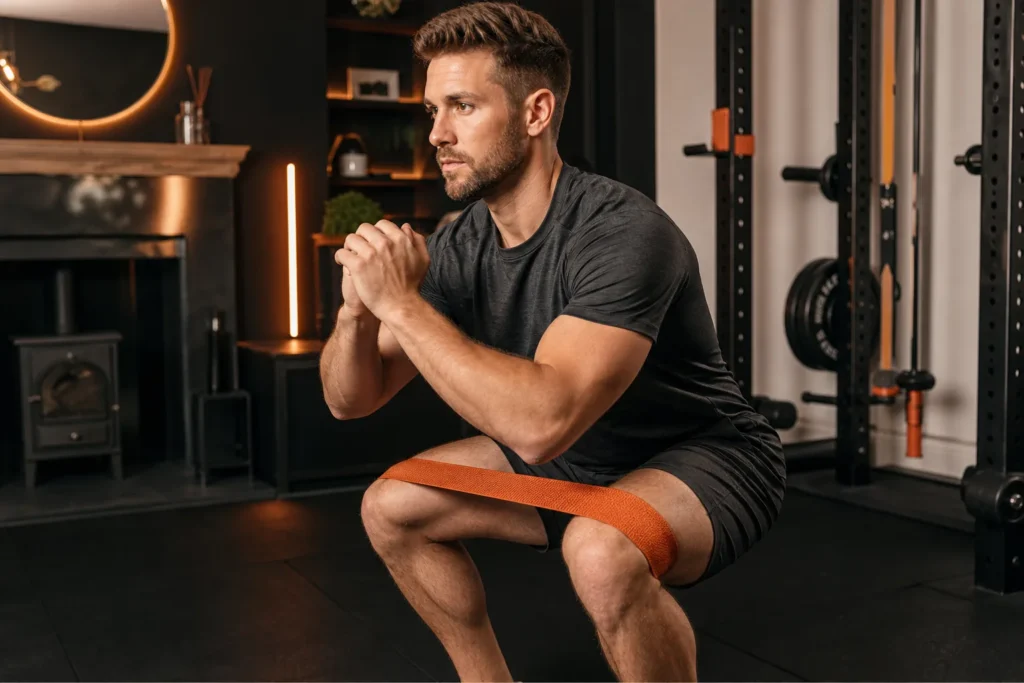
Thin latex loops have a habit of rolling up your thighs mid-squat. Fabric bands solve that. Elvire’s bands are wide, cloth-covered and lined with rubber grip strips, so they stay in place.
You get three colour-coded resistance bands for different levels. Use them above your knees for squats, glute bridges, crab walks and clamshells to really fire up your glutes and hips.
Fabric does not stretch as far as latex, so these are for lower-body work only. For upper-body moves, add a set of long loops or tubes.
- Will not roll up or pinch like latex
- Wide and comfortable on bare skin
- Great for squats, bridges and side steps
- Washable
- Only for lower-body loop exercises
- Limited stretch, so not for upper-body moves

THERABAND Resistance Bands Beginner Set
Best for rehabBest for: Physio exercises, Pilates, older users and gentle strength work
If a physiotherapist has given you exercises, there is a good chance they used THERABAND. These flat bands are the standard in clinics, and the colour coding makes it easy to follow a rehab plan.
This beginner set includes yellow, red and green bands, rising from 1.3 to 2.1 kg at 100% stretch. Each is 1.5 metres long, so you can cut, wrap or tie it as needed.
They are designed for rehab, mobility and Pilates rather than heavy strength work. Store them away from sunlight to keep the rubber in good condition.
- The brand physios use
- Gentle, clearly graded resistance
- Long flat bands wrap easily
- Very light and portable
- Too light for most strength training
- Can tear if overstretched or nicked

Gritin Mini Loop Resistance Bands
Best budgetBest for: Warm-ups, glute activation and travel on a tight budget
For a few pounds, these Gritin mini loops give you five resistance bands in a pouch. They are ideal for warm-ups, glute activation, ankle and shoulder rehab, and quick hotel room workouts.
Each is 30 cm long and 5 cm wide, with five clearly coloured levels. They work around your ankles, knees or wrists for small, targeted moves.
Like most thin latex loops, they can roll during squats. If that annoys you, upgrade to fabric bands for lower-body work.
- Five levels for under £10
- Tiny and travel-friendly
- Good for warm-ups and activation
- Colour-coded
- Can roll up on thighs
- Thin latex wears faster than fabric

How to choose the right resistance bands
Know the five main types
- Long power loops (around 2 m): the most versatile. Great for strength, stretching and assisted pull ups.
- Tubes with handles: feel like gym cables. Best for presses, rows and arm work.
- Fabric hip circles: wide, comfy and non-slip. Best for glutes and legs.
- Mini loops: small latex circles for warm-ups and activation.
- Flat physio bands: long, thin sheets for rehab and Pilates.
Many people end up with two types: long loops for strength and fabric circles for glutes.
Resistance levels
Resistance bands are rated in pounds or kilograms, often as a range. The resistance increases the more you stretch the band. Brands measure this differently, so compare levels within a brand rather than across brands. A set with several levels lets you progress.
Material
Natural latex is stretchy and strong. Layered latex is tougher than moulded rubber. Fabric bands are comfier and do not roll, but stretch less. If you have a latex allergy, choose fabric or latex-free bands.
Durability and safety
Bands can snap. Check them before every use for nicks, tears or sticky patches. Keep them out of direct sunlight, away from sharp edges and never stretch them more than about two and a half times their resting length.
Control the return. The hardest part of a band exercise is often letting it go back slowly. Take two to three seconds on the way back, and you will feel the muscles working far more.
Resistance band workout for beginners
Try this full-body routine three times a week. Do 2 to 3 rounds of 12 to 15 reps.
- Banded squat: stand on a long loop and hold it at your shoulders.
- Band row: anchor the band in a door at chest height and pull to your ribs.
- Glute bridge: fabric band above your knees, push your knees out as you lift.
- Overhead press: stand on the band and press upward.
- Band pull-apart: hold a light band at arm’s length and pull it to your chest.
- Lateral walk: mini loop around your ankles, take small steps sideways.
- Bicep curl and tricep pushdown: use tubes with handles.
The NHS strength exercise guide notes that resistance bands count toward the two strength sessions a week adults should aim for.
Resistance bands vs dumbbells
Dumbbells give steady resistance all the way through a move. Bands get harder the more you stretch them. That makes bands brilliant for warm-ups, glute work and adding extra challenge at the top of a lift. Dumbbells are better for building heavy strength over time.
Bands are cheaper, lighter and easier to travel with. Dumbbells last longer and are easier to track. The best home gyms have both. See our guides to the best dumbbells and best kettlebells.
Can resistance bands build muscle?
Yes. Research suggests resistance bands can build strength and muscle about as well as weights for many people, as long as you train close to fatigue and keep making the work harder over time. Use a heavier band, add reps, slow down the tempo or combine bands. For very strong lifters, bands are best used alongside weights rather than instead of them.
Our verdict: the best resistance bands for most people
The Mirafit long power bands are the best resistance bands for most homes. They cover strength, stretching and pull ups in one simple tool.
Working toward your first pull up? Get the FitBeast set. For glutes, choose the Elvire fabric bands, and for rehab the THERABAND set is the physio’s choice.
Resistance bands FAQs
Which resistance bands are best for beginners?
A set of long loop bands or a tube set with handles is a great start, as you can do a full-body workout. Add fabric loops if you want to focus on glutes and legs.
Are fabric or latex resistance bands better?
Fabric bands are more comfortable and do not roll, so they are best for lower-body loop exercises. Latex bands stretch further and suit upper-body and full-body moves.
How often should you replace resistance bands?
Check them before every use. Replace any band with nicks, tears, thin spots or a sticky feel. With regular use, latex bands typically last several months to a couple of years.
Can resistance bands help with pull ups?
Yes. Loop a long band over the bar and put your foot or knee in it. The band takes some of your weight. Move to lighter bands as you get stronger.
Can you lose weight with resistance bands?
Band workouts build muscle and burn energy, which can support weight loss alongside a healthy diet and regular activity like walking.
Are resistance bands safe for older adults?
Yes, they are a gentle way to build strength. Start with light bands, keep movements slow and controlled, and check with a GP if you have a health condition.
Explore more recovery and accessory guides in our accessories and recovery hub.