Gym flooring is the least exciting part of a home gym, but it might be the most important. The right floor protects your carpet, laminate or concrete from dents and scratches. It soaks up noise and vibration so your neighbours stay happy. It also gives you a stable, grippy surface that makes lifting and jumping safer.
The best choice depends on what you do and where you train. A garage with heavy dumbbells needs something very different from a bedroom walking pad. We compared the main types of gym flooring available in the UK: thick rubber tiles, heavy rubber mats, EVA foam jigsaw tiles and PVC equipment mats. Here are our picks, plus a simple guide to getting it right.
We research products independently. If you buy through links on this page we may earn a commission at no extra cost to you. Learn more.
Our quick picks
- Best overallCannons UK Flatline PRO 20mm Rubber TilesSee price
- Best value rubber tileEquipped Gym 20mm SBR Rubber TileSee price
- Best budget rubberArk Mat Rubber Crumb Gym Floor TilesSee price
- Best single matARKMat Heavy Duty Rubber Gym Mat 12mmSee price
- Best foam tilesKAYMAN Interlocking EVA Foam Gym Floor MatsSee price
- Best for treadmills and bikesAmazon Basics Equipment and Treadmill MatSee price
- Best for floor workoutsINNHOM Large Exercise MatSee price
In this guide
Best gym flooring compared
| Gym flooring | Type | Thickness | Size | Best for |
|---|---|---|---|---|
| Cannons UK Flatline PRO | Rubber tiles | 20 mm | 4 x 1 m² tiles | Most home gyms |
| Equipped Gym SBR Tile | Rubber tile | 20 mm | 1 x 1 m, 17.5 kg | Building a floor tile by tile |
| Ark Mat Rubber Crumb | Rubber tile | 15 mm | 1 x 1 m | Budget rubber floors |
| ARKMat Heavy Duty Mat | Rubber mat | 12 mm | 1.82 x 1.22 m | One lifting or machine zone |
| KAYMAN EVA Foam | Foam jigsaw | 10 mm | 12 x 60 cm tiles | Light workouts, playrooms |
| Amazon Basics Equipment Mat | PVC mat | 8 mm | 1.83 x 0.76 m | Treadmills and bikes |
| INNHOM Large Exercise Mat | PVC mat | 7 mm | 1.83 x 1.23 m | Floor workouts and HIIT |
The 7 best gym flooring options
Cannons UK Flatline PRO 20mm Rubber Tiles
Best overallBest for: Garages and spare rooms with free weights, racks and cardio machines
For most home gyms, 20 mm rubber tiles are the sweet spot, and Cannons UK’s Flatline PRO is our pick. The tiles are a full metre square, so a 4 m² pack covers a typical lifting area with only a few joins.
At 20 mm thick, they protect concrete and wooden floors from dumbbells, kettlebells and machine feet. They also soak up vibration and noise, which helps in garages attached to the house.
You can trim tiles with a sharp knife to fit around walls and doors. They are heavy, so plan to lay them with a helper. Like all new rubber, expect a smell for a few weeks. Airing the room helps.
- Thick 20 mm rubber protects floors and absorbs impact
- Big 1 m tiles mean fewer joins
- Easy to cut and lift
- Works under racks, benches and cardio kit
- Heavy to carry and fit
- Rubber smell for the first few weeks

Equipped Gym 20mm SBR Rubber Tile
Best value rubber tileBest for: Building your floor one tile at a time, or covering odd-shaped spaces
If you want rubber tiles but need a specific number, Equipped Gym sells its 20 mm SBR tiles one at a time. That makes it easy to cover an exact area or add tiles as your gym grows.
Each tile is a metre square and weighs about 17.5 kg, so it sits firmly without glue. The fine-granule surface is grippy for lifting and lunges.
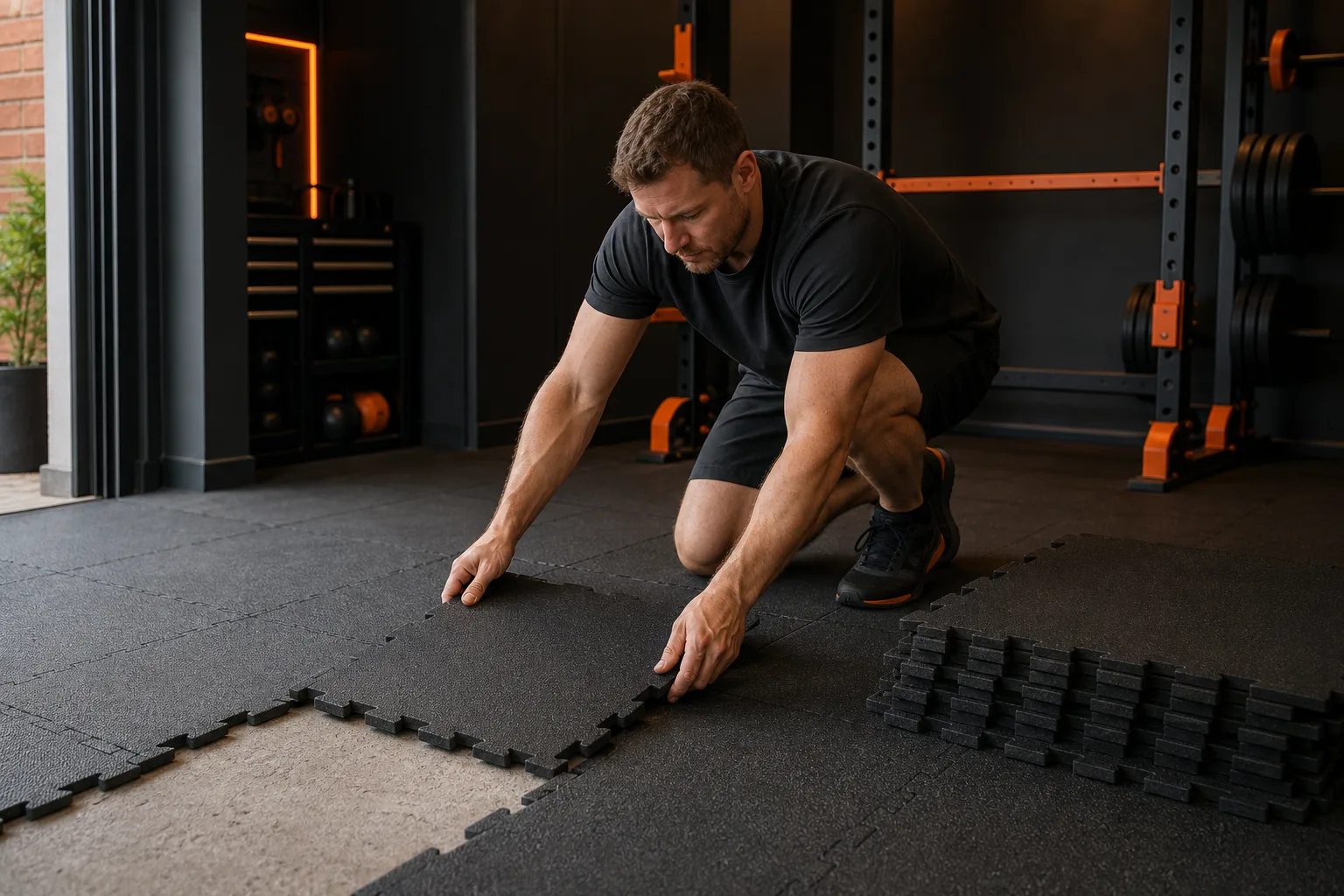
Lay them in a staggered brick pattern to hide joins, or add the optional connectors to stop tiles shifting. A Stanley knife and straight edge handle cuts.
- Sold singly, so buy exactly what you need
- Dense rubber with grippy surface
- Heavy enough to stay put
- Optional connectors reduce gaps
- Straight edges can show small gaps
- Each tile is heavy to handle

Ark Mat Rubber Crumb Gym Floor Tiles
Best budget rubberBest for: Rubber protection on a tighter budget
Ark Mat’s 15 mm rubber crumb tiles are a good-value way to get a proper rubber floor. They are made for use under free weights, treadmills, benches, racks and rowing machines.
The textured surface is grippy, and bevelled edges make the tiles safer at the border of your training area. Each tile is a metre square and easy to cut.
At 15 mm, they offer less shock absorption than 20 mm tiles. For dumbbells under 20 kg and cardio machines, they are plenty. For heavy deadlifts, go thicker.
- Cheaper per square metre than 20 mm tiles
- Bevelled edges reduce trip risk
- Good for treadmills, benches and racks
- Two-year warranty
- Less protection for heavy dropped weights
- Crumb surface can shed slightly at first

ARKMat Heavy Duty Rubber Gym Mat 12mm
Best single matBest for: A single lifting zone or the area under a rack or machine
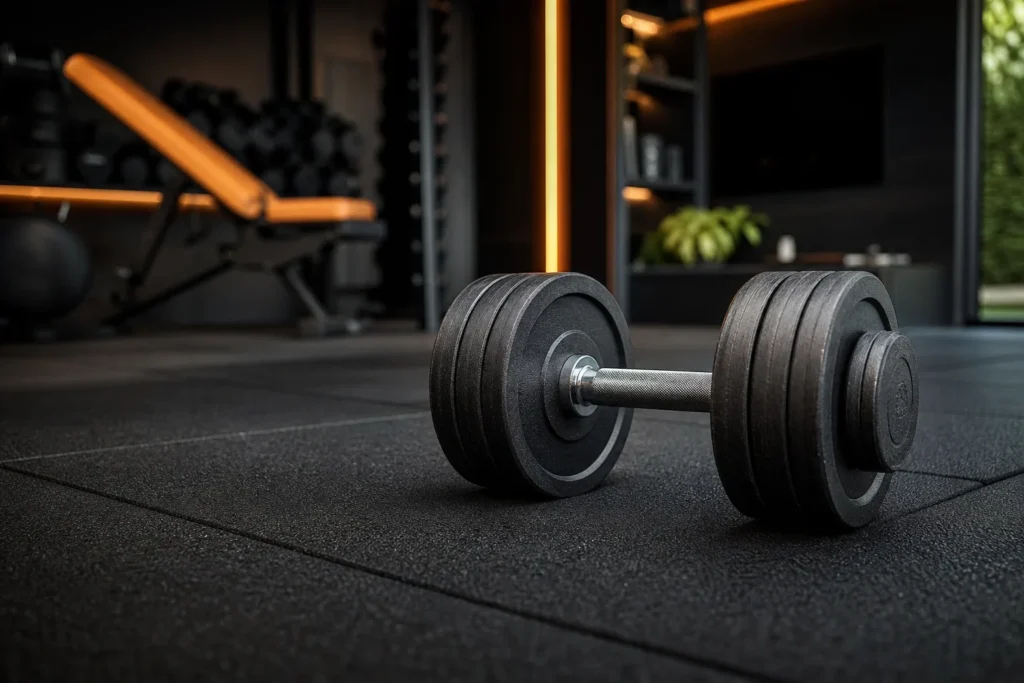
Not everyone needs a whole floor of rubber. This ARKMat is a single 6 x 4 ft slab of heavy-duty rubber, perfect for a lifting spot, under a bench or beneath a rowing machine.
Because it is one piece, there are no seams to trip on or collect dust. It is waterproof and easy to wipe clean, so it works in a damp garage too. A hidden handle helps you move it.
At 12 mm it is thinner than our tile picks, so it is best for moderate weights and machines rather than heavy drops.
- One piece, so no joins
- Hidden handle makes it easier to move
- Waterproof and easy to clean
- Works indoors or in a garage
- Covers one zone, not a whole room
- 12 mm is thinner than tiles

KAYMAN Interlocking EVA Foam Gym Floor Mats
Best foam tilesBest for: Light workouts, yoga, stretching and multi-use rooms
EVA foam jigsaw tiles are the cheapest way to cover a large area. This KAYMAN pack gives you 12 tiles of 60 x 60 cm, which click together without tools.
The foam is soft and warm underfoot, great for bodyweight workouts, yoga, stretching and kids’ play. It is also free of phthalates, lead and latex.
Foam is not tough enough for heavy equipment. Racks, treadmills and dumbbells will dent it. Use it for light training, or as a layer under a rubber mat.
- Cheap and very light
- Clicks together in minutes
- Soft and warm underfoot
- Easy to lift and store
- Dents under heavy machines and racks
- Not for dropped weights

Amazon Basics Equipment and Treadmill Mat
Best for treadmills and bikesBest for: Putting a treadmill, walking pad, bike or cross trainer on carpet or wood
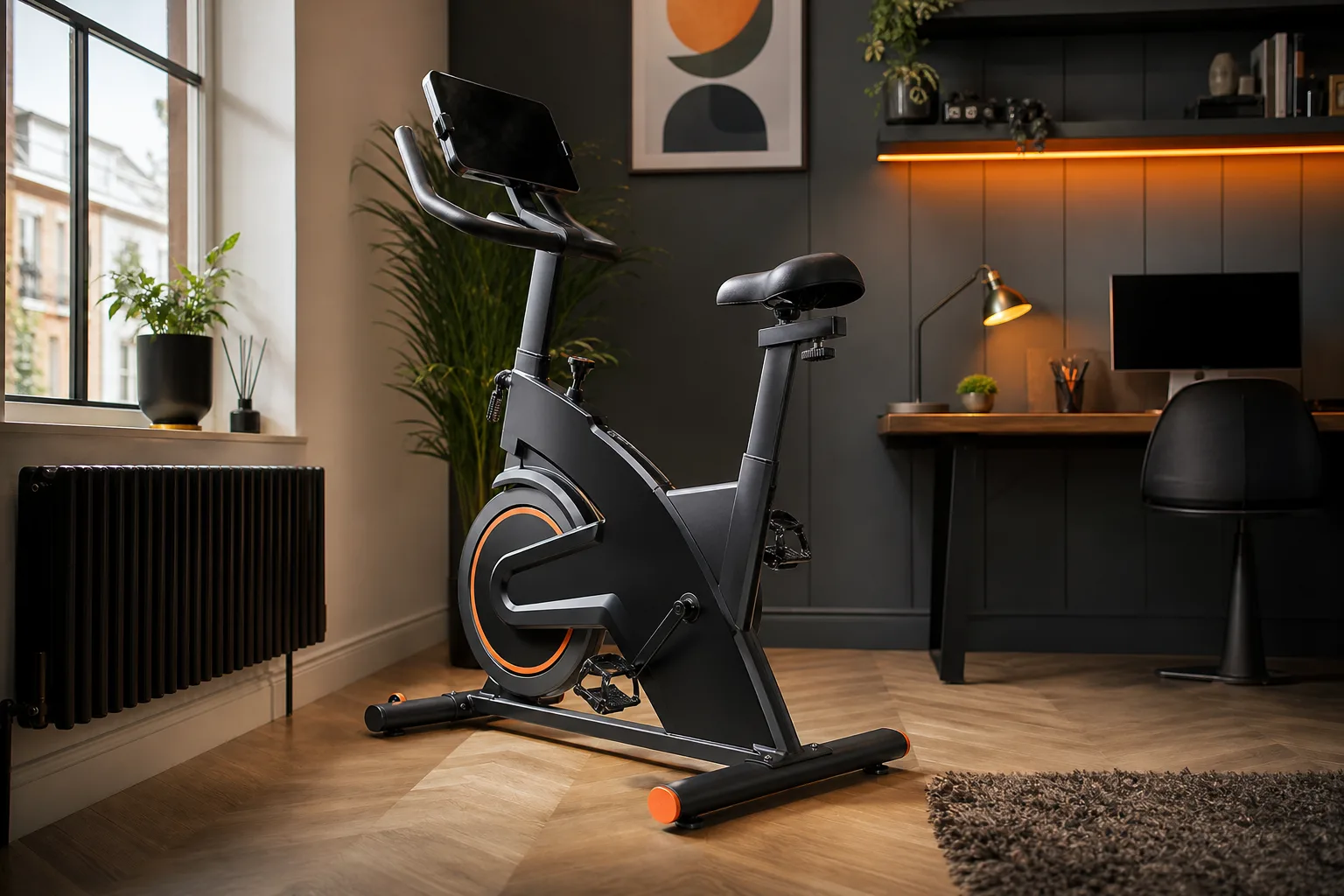
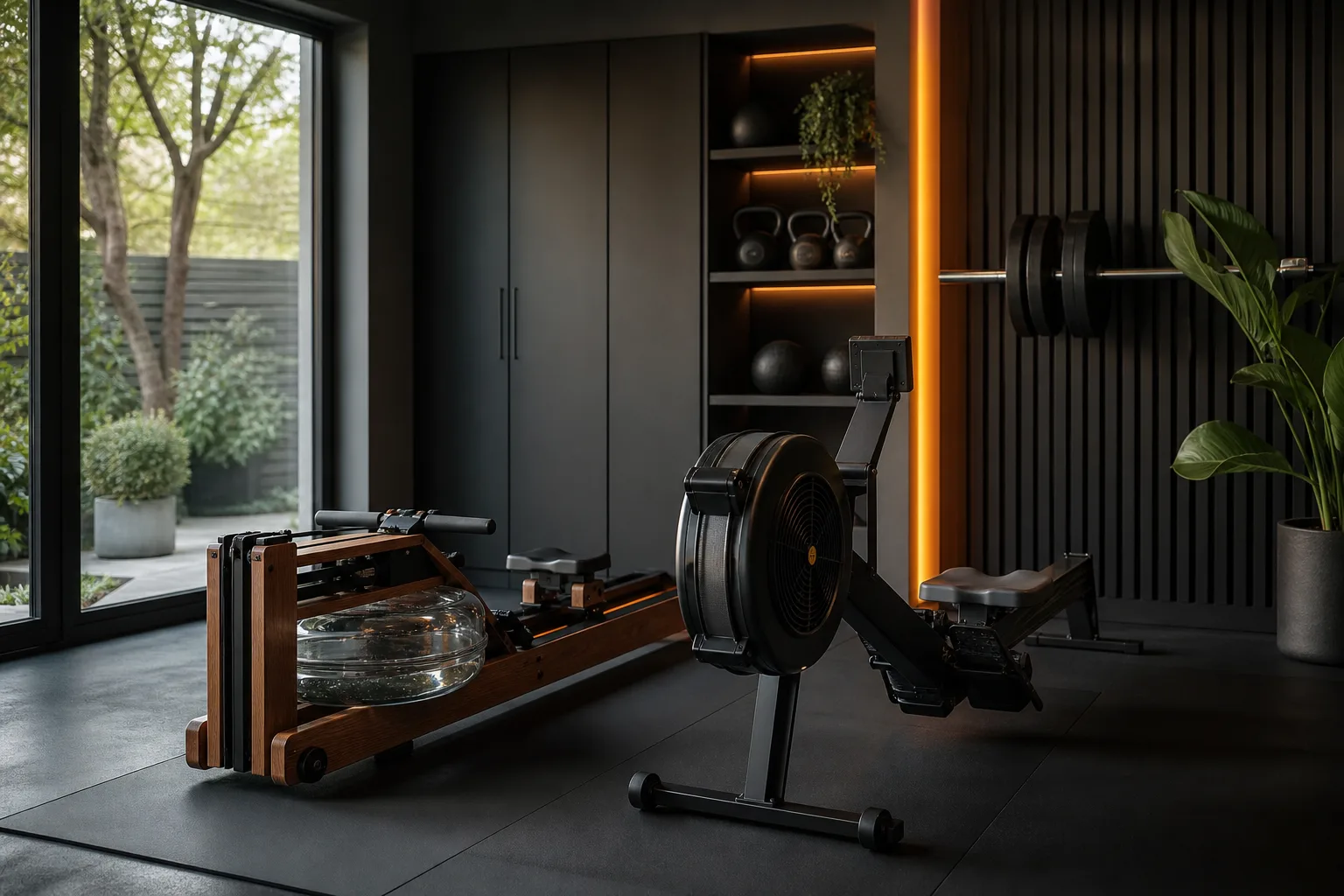
Every treadmill, walking pad, exercise bike and rowing machine should sit on a mat. It stops the feet denting your floor, keeps carpet fibres and dust out of the motor and cuts down vibration.
This Amazon Basics mat is 1.83 m long and 76 cm wide, which fits most treadmills and bikes. It is high-density PVC, so it is tougher than foam but light enough to move easily.
It is not designed for dropped weights. Use it for cardio machines, and choose rubber for your lifting area.
- Sized for most treadmills and bikes
- Protects carpet and keeps dust out of motors
- Light and easy to position
- Low price
- Not thick enough for weights
- PVC smell at first
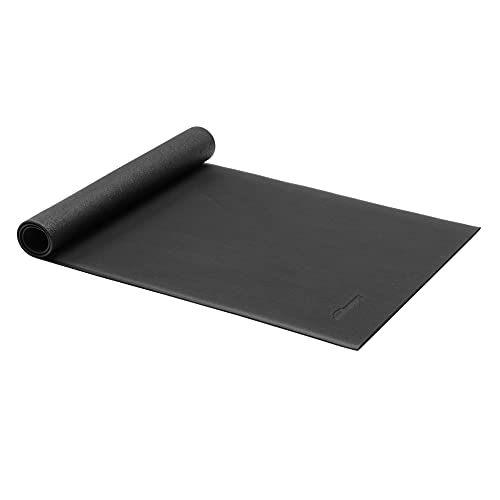
INNHOM Large Exercise Mat
Best for floor workoutsBest for: HIIT, bodyweight training and stretching in living rooms and bedrooms
If you do follow-along workouts, HIIT or stretching at home, a big mat makes a real difference. The INNHOM mat is 1.83 x 1.23 m, so there is room to jump, lunge and lie down without hitting the floor.
The 7 mm high-density PVC cushions your knees and wrists and has a grippy, scratch-resistant top. It rolls up into a carry bag with straps when you are done.
It is great for bodyweight work and light dumbbells, but not heavy lifting. Leave it flat for a day after unrolling to stop the edges curling.
- Big enough for burpees and stretches
- Cushioned for knees and wrists
- Rolls up and stores in a bag
- Grippy, scratch-resistant top
- Not for heavy weights
- Rolled mats can curl at the edges at first

How to choose the best gym flooring
Match the floor to your training
- Heavy weights and racks: 15 to 20 mm rubber tiles, or thicker for heavy drops.
- Dumbbells and kettlebells: 15 to 20 mm rubber tiles or a heavy rubber mat.
- Cardio machines: a PVC equipment mat or rubber tiles.
- Bodyweight, yoga and HIIT: EVA foam tiles or a large exercise mat.
Thickness
Thicker gym flooring absorbs more impact and noise. For most home gyms, 15 to 20 mm rubber is plenty. Olympic lifting with dropped barbells needs dedicated platforms or 30 mm+ rubber.
Rubber vs foam vs PVC
Rubber is the toughest and best at absorbing impact. Foam is cheap, soft and light but dents easily. PVC equipment mats are thin but tough, ideal under machines.
Your subfloor
Concrete garages can take any flooring. Wooden floors upstairs need thicker rubber to cut noise, and you should spread heavy kit across joists. On carpet, a firm PVC or rubber mat works better than foam, which can shift.
Noise in flats
Rubber reduces impact noise but will not make a flat soundproof. For walking pads and treadmills, add a thick mat and avoid late sessions. For weights, set them down rather than dropping them.
Lay rubber tiles in a staggered brick pattern so joins do not line up. Leave a 5 mm gap at walls for expansion. If the smell bothers you, wash the tiles with mild soapy water and air the room for a few days.
How much gym flooring do you need?
Measure the area you will actually use, not the whole room. Common sizes:
- Walking pad or treadmill: about 2 x 1 m.
- Rowing machine: about 2.5 x 1 m.
- Dumbbell and bench area: about 2 x 2 m.
- Squat rack with space to load plates: about 3 x 3 m.
Add 10% extra to allow for cuts and mistakes. Our home gym setup hub has more planning tips.
Gym flooring for garage gyms
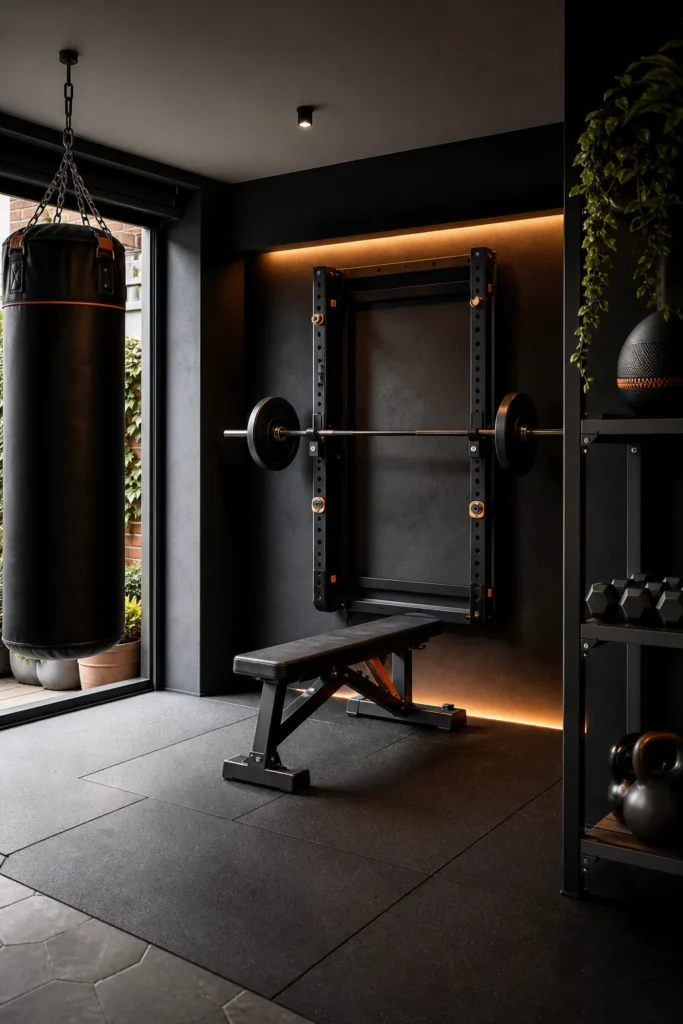
Garages are cold, dusty and sometimes damp. Rubber tiles handle this well because they are waterproof and insulate against cold concrete. Sweep and dry the floor before laying, and lift tiles occasionally to check for damp underneath.
Rubber also makes a garage feel like a real gym. Combine it with a rack and bench from our benches, racks and machines hub and a set of dumbbells, and you are well on your way.
Is gym flooring worth it?
Yes. A dropped dumbbell can crack a tile or dent a wooden floor, and repairs cost far more than a few rubber tiles. Good flooring also stops machines sliding, reduces wear on your kit and makes training feel safer and more comfortable. It is especially important under heavy cardio machines like a treadmill or rowing machine.
For safety advice on staying active, see the NHS exercise pages.
Our verdict: the best gym flooring for most homes
The Cannons UK Flatline PRO 20mm tiles are the best gym flooring for most home gyms, with thick rubber, big 1 m tiles and easy fitting.
Need exact quantities? Buy Equipped Gym tiles one at a time. For one lifting zone, the ARKMat 12mm mat is ideal, and under treadmills and bikes, the Amazon Basics equipment mat does the job for little money.
Gym flooring FAQs
What is the best flooring for a home gym?
For most home gyms, 15 to 20 mm rubber tiles are best. They protect your floor, absorb impact and noise, and handle weights and machines. Foam tiles suit light workouts only.
How thick should gym flooring be?
15 to 20 mm rubber suits most home gyms with dumbbells, kettlebells and machines. 8 to 10 mm is enough under cardio equipment. Heavy dropped barbells need 30 mm or a lifting platform.
Can I put gym flooring on carpet?
Yes. Use firm rubber tiles or a PVC equipment mat. Foam tiles can shift on carpet. Heavy machines on thick carpet may need a solid mat to stay level.
Do rubber gym tiles smell?
New rubber has a smell that fades over a few weeks. Wash tiles with mild soapy water and keep the room ventilated to speed it up.
Are foam floor mats good for a home gym?
They are good for bodyweight workouts, yoga and light weights, but heavy equipment and dropped weights will dent them.
Will gym flooring stop noise for neighbours?
It will reduce impact noise and vibration, but not stop it completely. Thicker rubber helps most. Avoid dropping weights and late-night sessions in flats.
Find more planning guides in our home gym setup hub.