A pull up bar is one of the best value buys in home fitness. For the price of a takeaway, you get a tool that builds your back, arms, shoulders and core. Pull ups, chin ups and hanging leg raises are some of the hardest and most rewarding moves you can do.
The catch is fitting one safely. UK homes have narrow door frames, plasterboard walls and older plaster, so the wrong bar can slip or damage your frame. We compared the main types UK buyers can get: leverage doorway bars, no-screw telescopic bars, wall and ceiling mounts and freestanding power towers. Here are our picks, with honest advice on which will suit your home.
We research products independently. If you buy through links on this page we may earn a commission at no extra cost to you. Learn more.
Our quick picks
- Best doorway barIron Gym Total Upper Body Workout BarSee price
- Best for narrow UK doorsRHINOSPORT Pull Up Bar for Narrow DoorwaysSee price
- Best budgetSportneer No Screws Pull Up BarSee price
- Best wall mountJX Fitness Wall Mounted Pull Up BarSee price
- Best multi-gripDH FitLife 4-in-1 Wall Mounted Pull Up BarSee price
- Best ceiling mountFitarc Joist Mount Pull Up BarSee price
- Best freestandingSportsroyals Power Tower Dip StationSee price
In this guide
Best pull up bar picks compared
| Pull up bar | Type | Fit / size | Max load | Drilling? |
|---|---|---|---|---|
| Iron Gym Total Upper Body | Leverage doorway | Most standard frames | 300 lb (about 136 kg) | No |
| RHINOSPORT Narrow Doorway | Telescopic | 70–92 cm frames | 200 kg static | No |
| Sportneer No Screws | Telescopic | 75–94 cm frames | 135 kg (manual) | No |
| JX Fitness Wall Mounted | Wall mount | Solid wall | 275 lb (about 125 kg) | Yes |
| DH FitLife 4-in-1 | Wall mount | Solid wall | 200 kg | Yes |
| Fitarc Joist Mount | Ceiling mount | Joists | See listing | Yes |
| Sportsroyals Power Tower | Freestanding | 164–264 cm height range | 204 kg | No |
The 7 best pull up bars
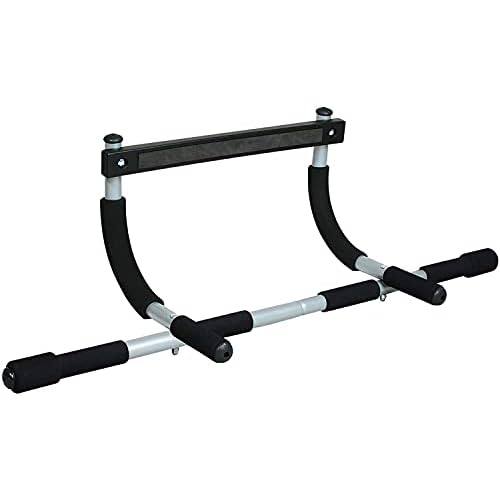
Iron Gym Total Upper Body Workout Bar
Best doorway barBest for: Renters and beginners who want a no-drill bar that comes off in seconds
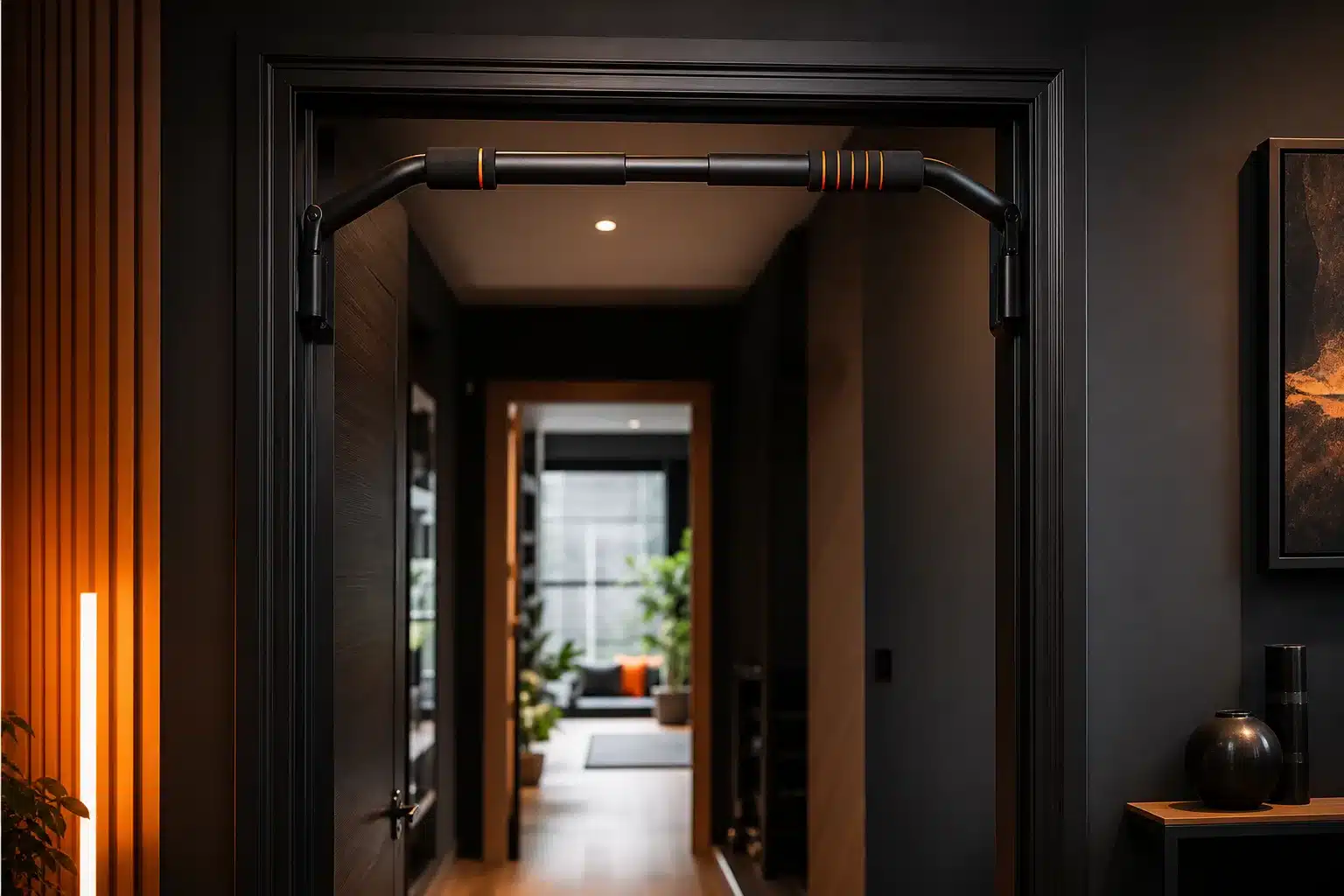
The Iron Gym is the classic leverage pull up bar. It hooks over the top of your door frame and braces against the wall on the other side. Your body weight holds it in place, so there are no screws.
You get wide, narrow and neutral grips, which lets you mix pull ups, chin ups and hammer grip variations. Lift it off and it works on the floor for push ups, dips and sit ups too.
It suits most standard UK internal door frames, and a safety wedge is included. Use foam pads or tape to protect paintwork, as it can leave marks on soft wood over time.
- No screws or drilling
- Lifts off the door after use
- Wide, neutral and narrow grips
- Also works on the floor for push ups and dips
- Can mark door frames over time
- Not for thin or very wide frames
RHINOSPORT Pull Up Bar for Narrow Doorways
Best for narrow UK doorsBest for: Small UK homes and rentals with narrow internal door frames
Many telescopic pull up bar designs only fit frames 75 cm and wider. This RHINOSPORT bar starts at 70 cm, so it fits more narrow UK doorways and rentals.
It twists to tighten against the frame, then locks with a dual spring and gear system to stop it rotating or slipping. A built-in spirit level helps you fit it straight. Big soft pads protect your paintwork.
Like all tension bars, it relies on a solid frame. Do not use it on hollow, tiled or glass frames, and check it is tight before every session.
- Fits narrower frames than most rivals
- Dual locking system
- Thick pads protect paintwork
- Cheap and easy to fit
- Needs a solid wood or brick frame
- You lose head room above the bar

Sportneer No Screws Pull Up Bar
Best budgetBest for: A simple, cheap tension bar for standard-width frames
The Sportneer is a straightforward telescopic bar for frames between 75 and 94 cm. You twist it to length, tighten it in the frame and you are ready to go.
Sportneer’s own manual gives a maximum load of 135 kg, which is lower than some listings suggest. We would go by the manual. It is fine for most people doing strict pull ups, but not for kipping or swinging.
As the brand says, check the fit before every use. Tension bars can loosen as frames move with the seasons.
- Low price
- Fits wider frames up to 94 cm
- Doubles as a floor bar for push ups
- Recommended load is lower than the listing headline
- Must be re-checked before each use

JX Fitness Wall Mounted Pull Up Bar
Best wall mountBest for: Garages and home gyms with a solid brick or block wall
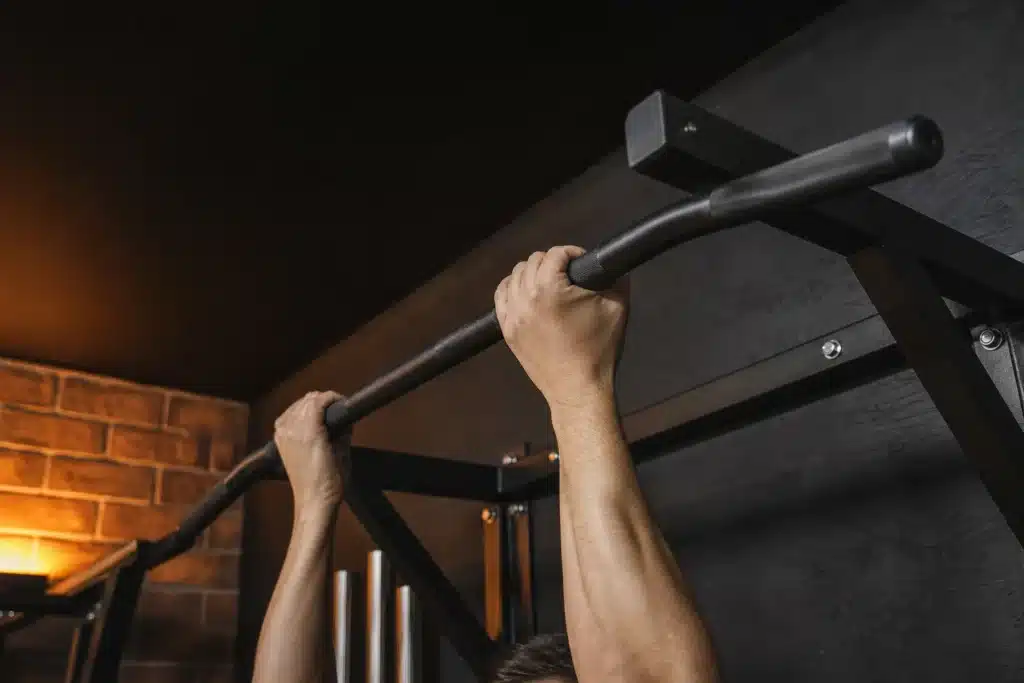
A wall-mounted pull up bar gives you clear space above and in front, so you can do full pull ups without hitting your head. The JX Fitness bar is a popular choice for garages and spare rooms.
It is made from heavy-duty steel with triangular braces, and has foam grips plus hooks for a punch bag or suspension trainer. That makes it a handy anchor point for a home gym.
It must be bolted into solid brick or concrete. Never fit it to plasterboard. If in doubt, ask a handyperson to fit it.
- More room to move than a doorway bar
- Hooks for a punch bag or suspension trainer
- Triangle supports add rigidity
- Two-year warranty
- Needs drilling into solid masonry
- Lower load rating than some rivals

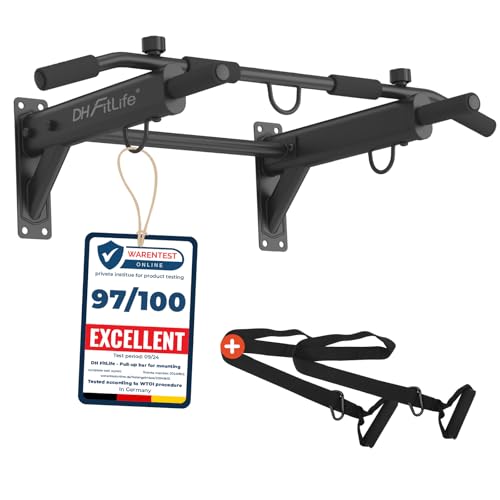
DH FitLife 4-in-1 Wall Mounted Pull Up Bar
Best multi-gripBest for: People who want lots of grips and a higher load rating on the wall
This German-designed bar gives you six grips, including angled handles that put your wrists in a more natural position. That helps if regular straight bars cause wrist or elbow niggles.
It is rated to 200 kg and comes with eight heavy-duty wall plugs. Three hooks let you hang a boxing bag or suspension trainer. It is a great all-in-one anchor for a garage gym.
As with any wall mount, it needs solid masonry. It also sticks out further than a simple bar, so leave room in front of the wall.
- Six grips including angled and neutral
- 200 kg rating
- Hooks for bag and suspension trainer
- Fixings included
- Needs drilling into a solid wall
- Sticks out a long way from the wall
Fitarc Joist Mount Pull Up Bar
Best ceiling mountBest for: Garages and lofts with exposed ceiling joists
If your garage has exposed joists, a ceiling-mounted pull up bar is a great option. It leaves the walls free and gives you space on every side for wide-grip pull ups and hanging leg raises.
The Fitarc bar is about 107 cm wide with foam grips and a powder-coated finish. It is designed for 8 to 9 foot beams.
It must be fixed into solid joists, never plasterboard. Check your ceiling height too. You need enough room to hang with straight arms without your feet touching the floor.
- Clear space on all sides
- Wide 107 cm bar for wide-grip pull ups
- Good for low-wall garages
- Solid feel when fixed properly
- Only for solid exposed joists
- Not suited to most living rooms

Sportsroyals Power Tower Dip Station
Best freestandingBest for: Homes where you cannot drill or use a door frame
A power tower is a freestanding frame with a pull up bar on top, dip handles and a back pad for knee raises. You do not need to drill anything, so it is ideal for renters and rooms with weak walls.
The Sportsroyals tower has a longer 100 cm base and a heavier 28 kg frame than many rivals, which makes it steadier. It adjusts from 164 to 264 cm and is rated to 204 kg.
It takes about a square metre of floor. Strict pull ups feel solid, but swinging or kipping will make any power tower rock, so keep reps controlled.
- No drilling or door frame needed
- Also trains dips and knee raises
- Long, heavy base for stability
- Height adjusts for most users
- Takes up floor space
- Can wobble on very hard kipping

How to choose the right pull up bar
Check your door frame
For doorway bars, measure the width of the frame between the inside edges, and the depth of the moulding. Most leverage bars need a frame 61 to 81 cm wide with sturdy moulding. Telescopic bars need a solid frame within their width range. Avoid hollow, glass, tiled or carved frames.
Doorway, wall, ceiling or freestanding?
- Doorway leverage bar: quick to fit and remove, no screws. Great for renters.
- Telescopic bar: cheap and compact, but relies on frame strength.
- Wall or ceiling mount: the most solid option, but you need to drill into masonry or joists.
- Freestanding power tower: no drilling, adds dips and knee raises, but takes floor space.
Weight limit
Check the maximum load and leave a safety margin. Dynamic moves like kipping put far more force through the bar than your body weight alone.
Grips
Multiple grips let you train different muscles. A neutral grip, with palms facing each other, is usually kindest to your shoulders and elbows. Foam grips are comfortable, but bare steel or textured grips work better with chalk.
Always test the bar before each workout. Hang with your feet still touching the floor and bounce gently. If it shifts, creaks or moves, stop and refit it. Never kip or swing on a doorway or tension bar.
Pull up progressions for beginners
Can’t do a pull up yet? Most people can’t at first. Try these steps, two or three times a week:
- Dead hangs: hang from the bar for 10 to 30 seconds to build grip strength.
- Scapular pulls: hang and pull your shoulder blades down without bending your arms.
- Negative pull ups: jump to the top and lower yourself as slowly as you can.
- Band-assisted pull ups: loop a resistance band over the bar and put a foot or knee in it.
- Full pull ups: start with sets of 1 to 3 and build up.
Resistance bands make a big difference here. See our guide to the best resistance bands for loops strong enough for assisted pull ups.
Pull up bar vs power rack
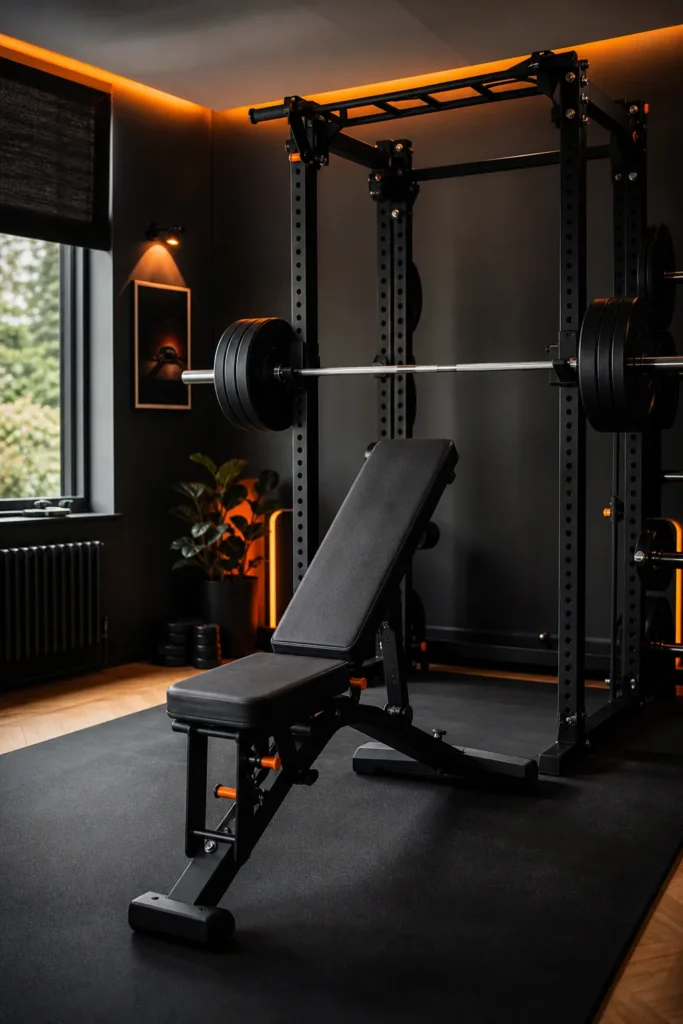
If you plan to lift heavy with a barbell, a power rack with a built-in pull up bar does both jobs. If you mainly want bodyweight training, a simple pull up bar is cheaper and saves space. Explore more options in our benches, racks and machines hub.
Is a pull up bar worth it?
Absolutely. Pull ups work your lats, upper back, biceps, forearms and core all at once. They balance out pressing moves like push ups and help posture, which matters if you sit at a desk all day. The NHS strength guidelines recommend working all major muscle groups twice a week, and a pull up bar covers the back and arms brilliantly.
Combine it with a pair of dumbbells and you have a very effective home gym in a tiny space.
Our verdict: the best pull up bar for most homes
The Iron Gym Total Upper Body bar is the best pull up bar for most people. It needs no screws, offers several grips and lifts off the door after use.
For narrow UK doorways, choose the RHINOSPORT bar. In a garage with a solid wall, the DH FitLife 4-in-1 is the most versatile, and if you cannot drill or use a door, the Sportsroyals Power Tower stands on its own.
Pull up bar FAQs
Will a pull up bar damage my door frame?
It can if the frame is weak or the bar is fitted badly. Leverage bars may leave marks on paintwork, so add foam pads or tape. Telescopic bars press outward, so only use them on solid wood or masonry frames.
Are doorway pull up bars safe?
Yes, if fitted correctly to a sturdy frame and used for strict, controlled reps. Check the fit before every session and never kip or swing.
What muscles does a pull up bar work?
Mainly your lats and upper back, plus biceps, forearms, rear shoulders and core. Hanging leg raises on the bar also work your abs and hip flexors.
How high should a pull up bar be?
High enough that you can hang with straight arms without your feet touching the floor. For most adults that means the bar is around 2 to 2.3 metres high.
Can I put a pull up bar in a rented flat?
Yes. A leverage doorway bar or a freestanding power tower needs no drilling. Avoid telescopic bars on weak frames and check your tenancy agreement before drilling walls.
How many pull ups should a beginner do?
Many beginners start at zero, and that is normal. Use negatives and band-assisted reps. Getting your first full pull up within a few months of regular practice is a great goal.
See more strength equipment in our benches, racks and machines hub.